
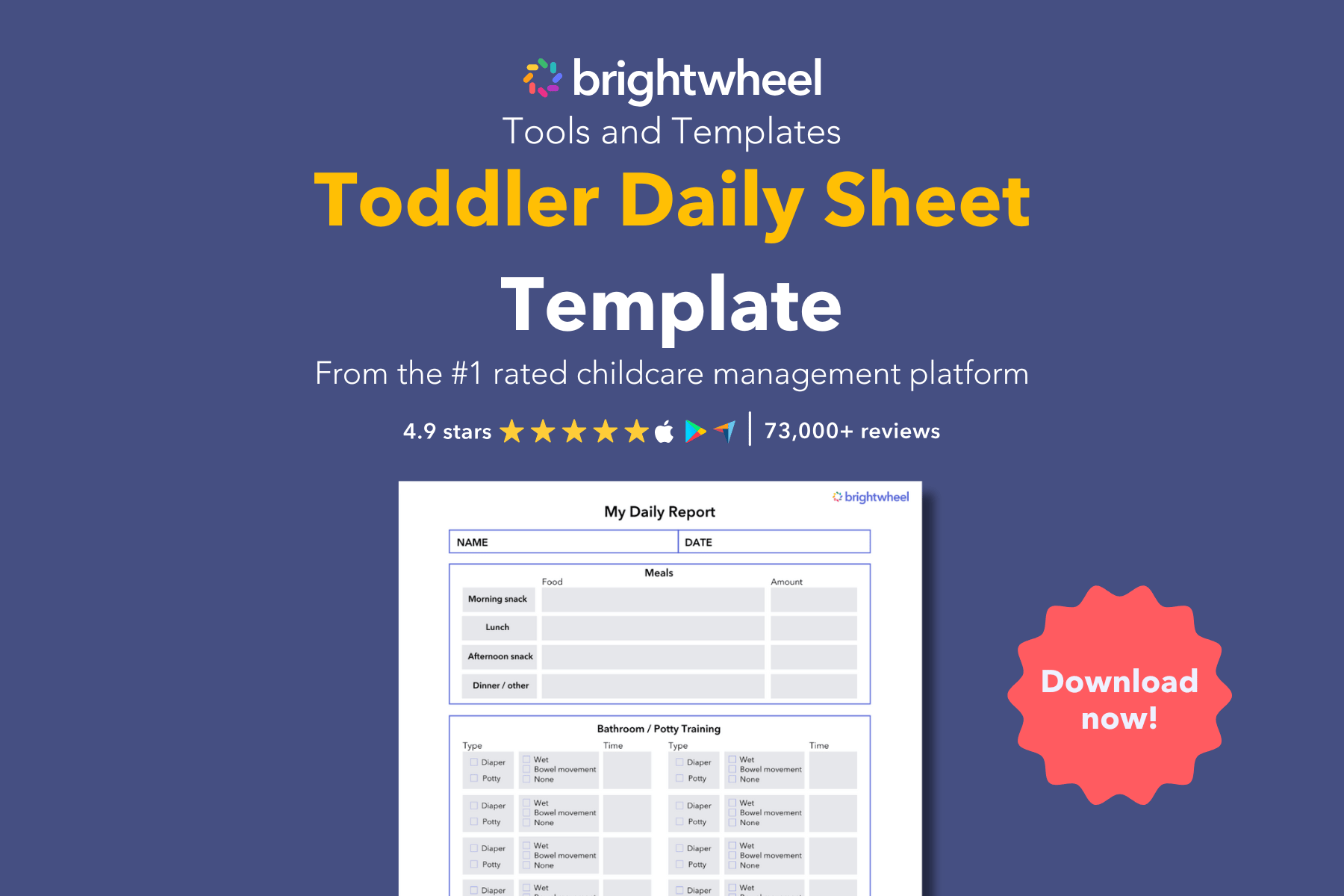
A toddler daily sheet is a documented log used by childcare providers to record a child's essential activities throughout the day, such as meals, naps, diaper changes, and learning milestones. These reports serve as a vital communication bridge, ensuring families feel connected to their child's routine and well-being while they are away.
Effective daily sheets help you build trust with families at your childcare or preschool program. This free, printable template allows you to easily record:
For childcare providers, a toddler daily sheet is more than just a checklist; it is a tool for building relationships. It allows staff to efficiently document a child's physiological needs and daily milestones, ensuring clear and consistent communication between the program and families.
When families receive detailed updates about their toddler's day—from what they ate for lunch to a new word they learned—it enhances their connection to your program. It also helps families maintain consistent routines at home, as they know exactly how long their child slept or when they last ate.
To provide the most value to families, a comprehensive daily sheet should capture the following details:
Using a standardized template streamlines record keeping, allowing educators to focus more on engaging with children and less on administrative tasks. Here is how to maximize the impact of your daily sheets:
Q: Why are daily sheets important for toddlers?
A: Daily sheets provide families with critical information about their child's health, nutrition, and routine. They help parents understand their child's mood and needs, ensuring a smooth transition between the childcare program and home.
Q: Can I use digital daily sheets instead of paper?
A: Yes, many childcare programs use digital platforms like brightwheel to send real-time updates, photos, and digital daily reports directly to a family's smartphone. This reduces paper waste and ensures families never lose a report.
Q: How often should daily sheets be updated?
A: Daily sheets should be updated in real-time throughout the day as events occur (e.g., recording a diaper change immediately after it happens) and sent to families at the end of every day.
Q: How does a toddler daily sheet differ from an infant daily sheet?
A: While both reports track daily activities, they focus on different developmental stages. An infant daily sheet typically has more detailed sections for tracking bottle feedings (time and amount), diaper changes, and sleep schedules. A toddler daily report, on the other hand, puts more emphasis on meals and snacks, potty training progress, learning activities, and social interactions with peers, reflecting their growing independence and development.
After downloading this daily sheet template, explore these other early education resources to support your program: