
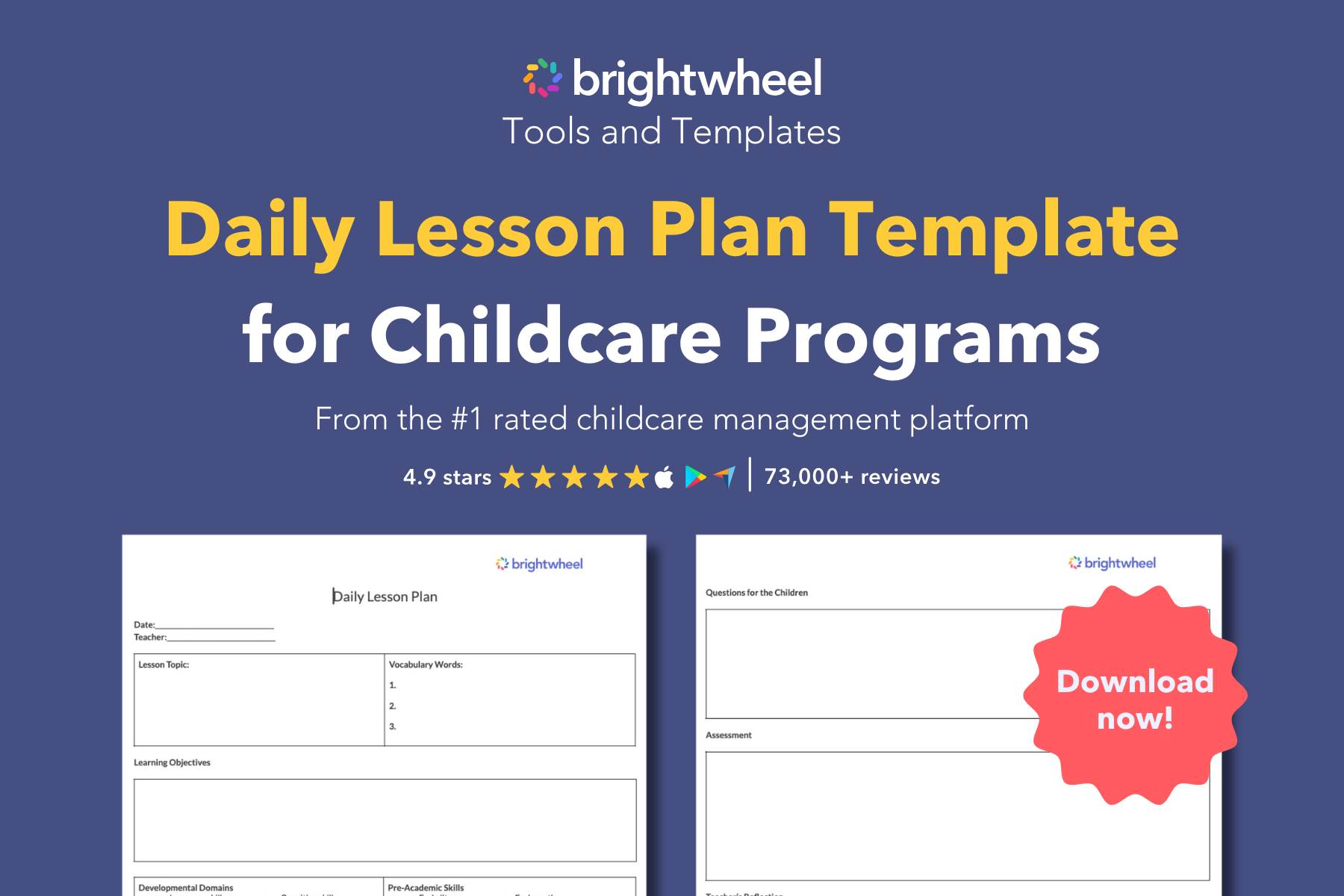
Download a free, customizable daily lesson plan template for your childcare program.

Daily Lesson Plan Template - brightwheel

A daily lesson plan template is a structured tool that helps early childhood educators organize learning objectives, activities, and materials for infants, toddlers, and preschoolers. By outlining specific goals for each day, this document ensures consistent, high-quality instruction while saving staff time on administrative work.

Download your free lesson plan template

Thoughtful lesson plans are a crucial part of running a high-quality early education program. Instead of creating plans from scratch every week, you can customize a proven template to suit your teaching style and the needs of the children in your care.

Using this template helps you:

  • Identify the topic: Clearly state topics and learning objectives for each lesson.
  • Track development: Record the developmental domains and pre-academic skills each activity supports.
  • Reflect and improve: Document the success of the planned activity and note areas for future improvement.

What should a comprehensive lesson plan include?

To maximize the impact of your teaching, a robust daily lesson plan usually includes four essential components:

  1. Learning objectives: What specific skill or concept will the children learn? (e.g., recognizing the color red or counting to five).
  2. Materials needed: A checklist of items required for the activity to ensure the educator is prepared before the lesson begins.
  3. Procedure/activity: A step-by-step guide on how to facilitate the lesson, including how to introduce the topic and how to guide the children through the experience.
  4. Assessment/reflection: A space to note how the children responded. Did they meet the objective? Do they need more practice?

Why use a standardized lesson plan template?

Using a consistent template provides a structured approach to developing an effective curriculum. It ensures that every lesson is tailored to meet specific developmental needs, rather than being organized at the last minute.

Key advantages include:

  • Save time and maintain consistency: A standardized format reduces the mental load of creating a new document daily. This allows educators to streamline their planning process and focus their energy on the children.
  • Promote flexibility and adaptability: While the format remains the same, the content is flexible. Educators can easily adjust plans based on children's interests. For example, if a group shows interest in insects during outdoor play, the "Science" section can be quickly updated to focus on bugs.
  • Support licensing and quality standards: Many state licensing boards and quality rating systems (QRIS) require documented evidence of curriculum planning. This template serves as a professional record that your childcare program provides organized, developmentally appropriate activities.

Related early education resources

After downloading the daily lesson plan template, explore these additional resources to support your program's curriculum and operations:

Frequently asked questions

Q: How often should I update my lesson plans?
A: Review and update lesson plans weekly. This allows you to adjust activities based on the children's progress, emerging interests, and any feedback from the previous week's reflection notes.

Q: Can this template be used for infants and toddlers?
A: Yes, this template is customizable for all age groups. For infants, focus the "activities" section on sensory experiences and one-on-one interactions, while preschool plans can focus more on structured group activities and pre-academic skills.

Q: What is the difference between a lesson plan and a curriculum?
A: A curriculum is the broad, long-term guide outlining what children should learn over a year, while a lesson plan is the specific, daily roadmap detailing how you will teach those concepts through individual activities.


Get your free template!