Free and easy-to-use school readiness checklist for childcare providers
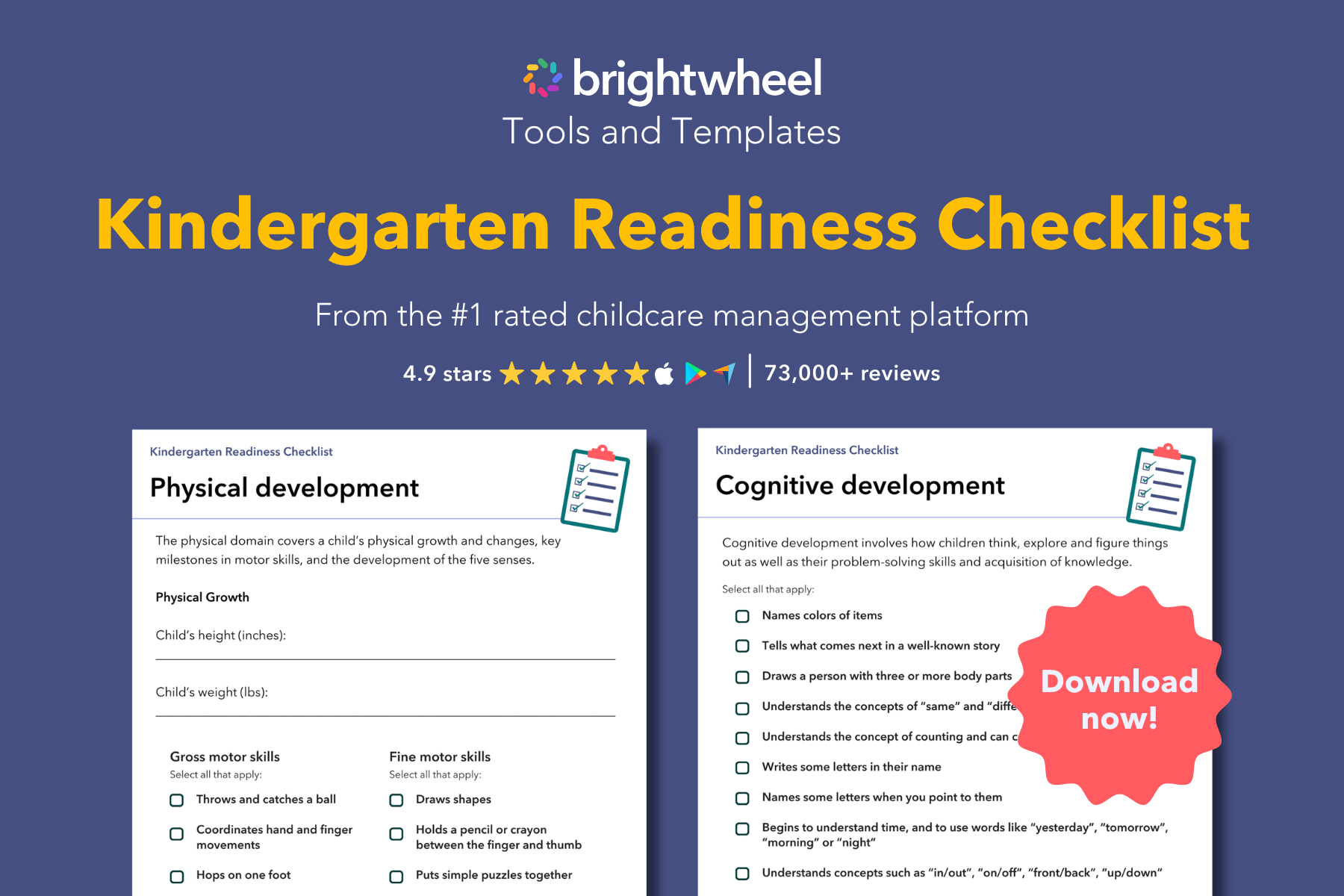
A kindergarten readiness checklist is a tool used by childcare providers and educators to assess a child's preparedness for school across key developmental areas. It typically evaluates skills in four main domains: physical and motor development, cognitive and academic skills, language and communication, and social-emotional maturity. By identifying strengths and areas for growth, providers can better support a child's transition to kindergarten.
Why use a kindergarten readiness checklist?
Entering kindergarten is a major milestone. This checklist helps childcare providers ensure children are prepared for the transition by providing a structured way to observe and document progress.
Designed specifically for childcare providers, this tool helps you:
- Assess development: Get a clear snapshot of a child's readiness across essential developmental domains.
- Guide family communication: Share progress and readiness milestones with families, helping them support their child’s transition to kindergarten.
- Support smooth transitions: Prepare children with the skills they need to confidently enter kindergarten and thrive in a structured learning environment.
What is included in the checklist?
A comprehensive readiness assessment looks at the whole child, not just academic knowledge. This checklist covers four key developmental areas crucial for kindergarten readiness:
1. Physical and motor skills
This section helps identify physical abilities that promote independence and confidence in the classroom.
- Gross motor skills: Running, jumping, balancing, and coordination.
- Fine motor skills: Using scissors, holding a pencil, and managing buttons or zippers.
- Self-care: Using the restroom independently and washing hands.
2. Cognitive skills
This area reviews academic readiness indicators and intellectual development.
- Early literacy: Recognizing letters, understanding rhyming, and showing interest in books.
- Numeracy: Counting to ten, recognizing shapes, and understanding basic patterns.
- Problem-solving: Completing puzzles and showing curiosity about how things work.
3. Language and communication
This domain evaluates how well a child can understand others and express themselves.
- Expressive language: Speaking in complete sentences and expressing needs and feelings clearly.
- Receptive language: Following two-step directions and understanding stories read aloud.
- Engagement: Engaging in conversations with peers and adults.
4. Social-emotional skills
Social readiness is often considered as important as academic skills for school success. This section assesses a child's ability to:
- Interact with peers: Sharing, taking turns, and playing cooperatively.
- Manage emotions: Coping with frustration and separating from families without excessive distress.
- Adapt to settings: Following classroom routines and transitioning between activities.
How to use a kindergarten readiness checklist
A kindergarten readiness checklist serves as a practical tool to gauge a child's preparedness for school and to identify areas where additional support might be needed. Here are some tips for effectively using this checklist:
- Observe during everyday activities: Integrate the checklist into everyday routines and interactions. Observe children while they play, engage with peers, or participate in structured activities to gather a natural and accurate assessment of their skills.
- Individualized assessment: Every child develops at their own pace. Use the checklist to gain insights into each child's unique strengths and areas for growth, avoiding comparisons between children.
- Collaborate with families: Share the checklist with families to promote open communication about a child's development. Encourage parents to provide insights based on their home experiences and work together on areas needing improvement.
- Plan targeted activities: Use insights from the checklist to design activities that support skill building in specific areas, such as fine motor skills, emotional regulation, or social interactions.
- Track progress over time: Revisit the checklist periodically to document progress. This can help track a child's development and adjust strategies to meet their evolving needs.
- Focus on positive reinforcement: Celebrate improvements and milestones with the child and their family. Positive reinforcement helps build confidence and motivation for further growth.
By using this checklist as a supportive tool rather than a rigid assessment, childcare providers can create a nurturing environment that fosters readiness for kindergarten.
Frequently asked questions
Q: At what age should I start using a kindergarten readiness checklist?
A: You can start observing readiness skills as early as age four, or the year before a child is eligible for kindergarten. This allows ample time to address any areas where a child may need additional support before school begins.
Q: Is a child ready for kindergarten if they don't meet every item on the checklist?
A: Not necessarily. Every child develops at their own pace, and few children will have mastered every single skill on the list before starting school. The checklist is meant to identify trends and areas for growth rather than serve as a strict pass/fail test.
Q: How can families support kindergarten readiness at home?
A: Families can support readiness by reading daily with their child, practicing self-help skills like dressing and toileting, and arranging playdates to build social skills. Encouraging independence in small daily tasks also builds confidence for the classroom environment.
Disclaimer: This checklist is for informational purposes and should be adapted to meet the standards set by your state or local school district. It’s not a definitive measure of readiness, as each child’s progress is unique.
Additional early education resources
After downloading this checklist, explore additional early education resources:
