Download a free, printable template for creating a classroom job chart
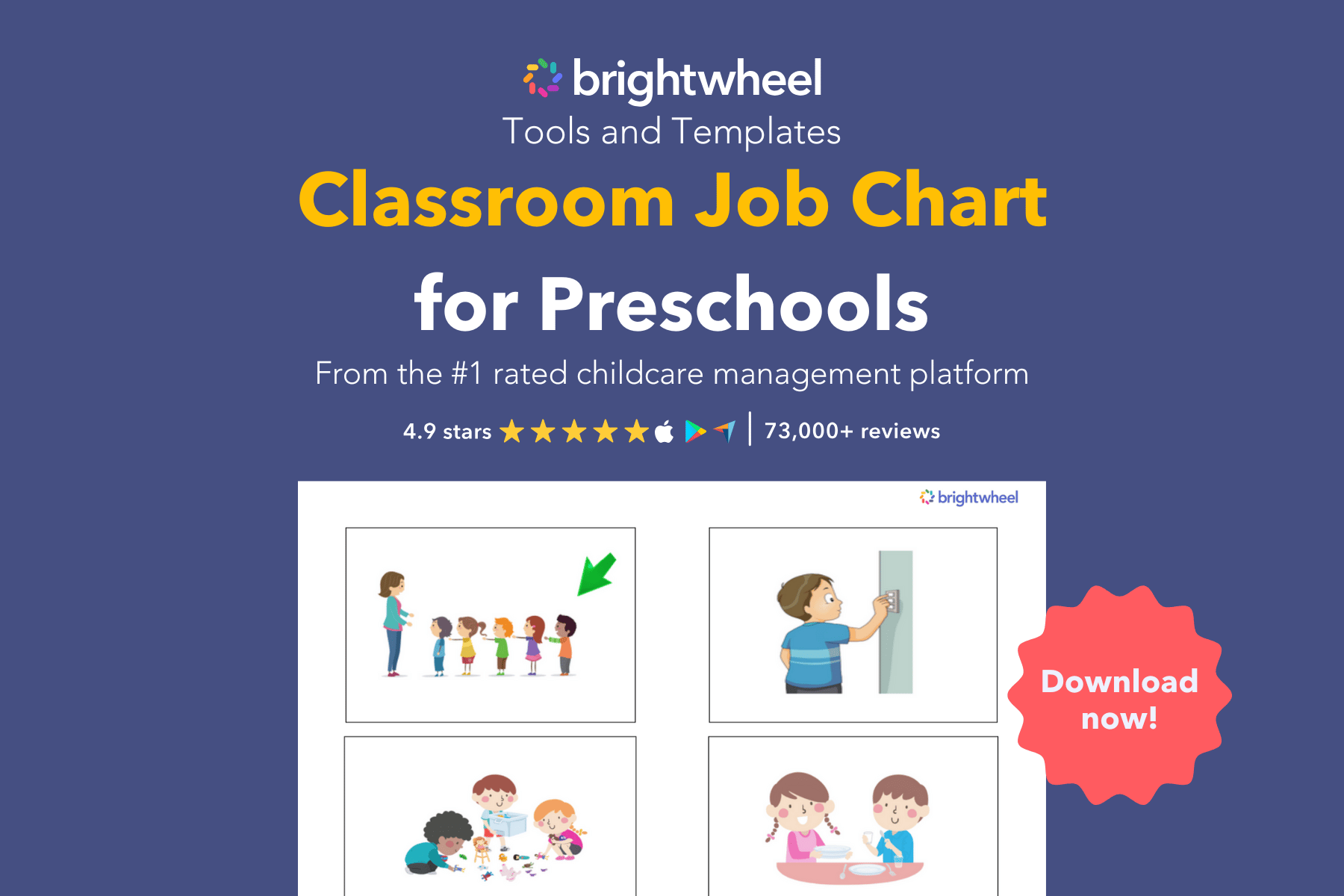
A classroom job chart is a visual management tool used in early childhood education to assign specific roles—such as line leader, light monitor, or snack helper—to students. By rotating these responsibilities, teachers can foster independence, build community, and support social-emotional development in young children.
Why use a classroom job chart?
Implementing a job chart in your childcare program does more than just help with classroom management; it creates a structured environment where children feel capable and valued.
When you assign a "job" to a preschooler, you provide them with a sense of purpose. This simple act supports several key developmental areas:
- Responsibility: Children learn to take ownership of tasks and contribute to the well-being of the group.
- Community: Rotating jobs ensures every child plays a role in the classroom community, reinforcing that everyone’s contribution matters.
- Early literacy: Associating pictures with text (e.g., a picture of a door next to the words "Door Holder") helps children recognize print and their own names.
- Self-confidence: Successfully completing a task boosts self-esteem and independence.
Common preschool classroom job ideas
Choosing the right jobs for your age group is essential for success. Here are several popular roles you can include in your rotation:
- Line leader: Leads the class when walking to the playground or lining up at the end of the day.
- Caboose: Walks at the very end of the line to ensure everyone stays together.
- Door holder: Holds the door open for classmates and teachers.
- Light monitor: Turns the lights on and off when entering or leaving the room.
- Weather reporter: Checks the weather and updates the class calendar or weather station.
- Librarian: Helps organize books and keeps the reading corner tidy.
- Plant helper: Helps water plants (with supervision).
- Snack helper: Assists with passing out napkins or cups during snack time.
How to implement a job rotation system
To get the most out of your classroom job chart, consistency is key.
- Introduce the jobs: Explain each role clearly during circle time so children understand what is expected.
- Use visuals: Since many preschoolers are pre-readers, use a job chart that combines words with images (like the icons included in our free template).
- Rotate regularly: A weekly rotation is standard. This gives children enough time to master a skill but keeps the excitement high.
- Make it a routine: Switch jobs at the same time every week, such as Monday morning circle time, to create a predictable routine.
Download the free guide and template
Ready to get started? We have created a comprehensive, printable guide to help you set up your system quickly.
Download this free guide to:
- Access a full sample list of jobs that support learning across developmental domains.
- Get step-by-step instructions on implementing a successful rotation process.
- Receive free, printable icons to create your own visual job chart immediately.
Frequently asked questions
Q: At what age can I start using a classroom job chart?
A: You can introduce simple classroom jobs as early as age two or three. For toddlers, keep tasks very simple, like "bell ringer" or "song helper," and ensure plenty of adult guidance.
Q: How often should I change classroom jobs?
A: Most childcare programs rotate jobs weekly. This duration allows children enough time to learn and practice their responsibilities without becoming bored with the task.
Q: What if a child refuses to do their assigned job?
A: If a child is resistant, offer encouragement or assistance rather than forcing them. You might also offer them a choice between two jobs next week to give them a greater sense of control.
After downloading this template to create a classroom job chart, explore other early education resources that promote child development below:
