
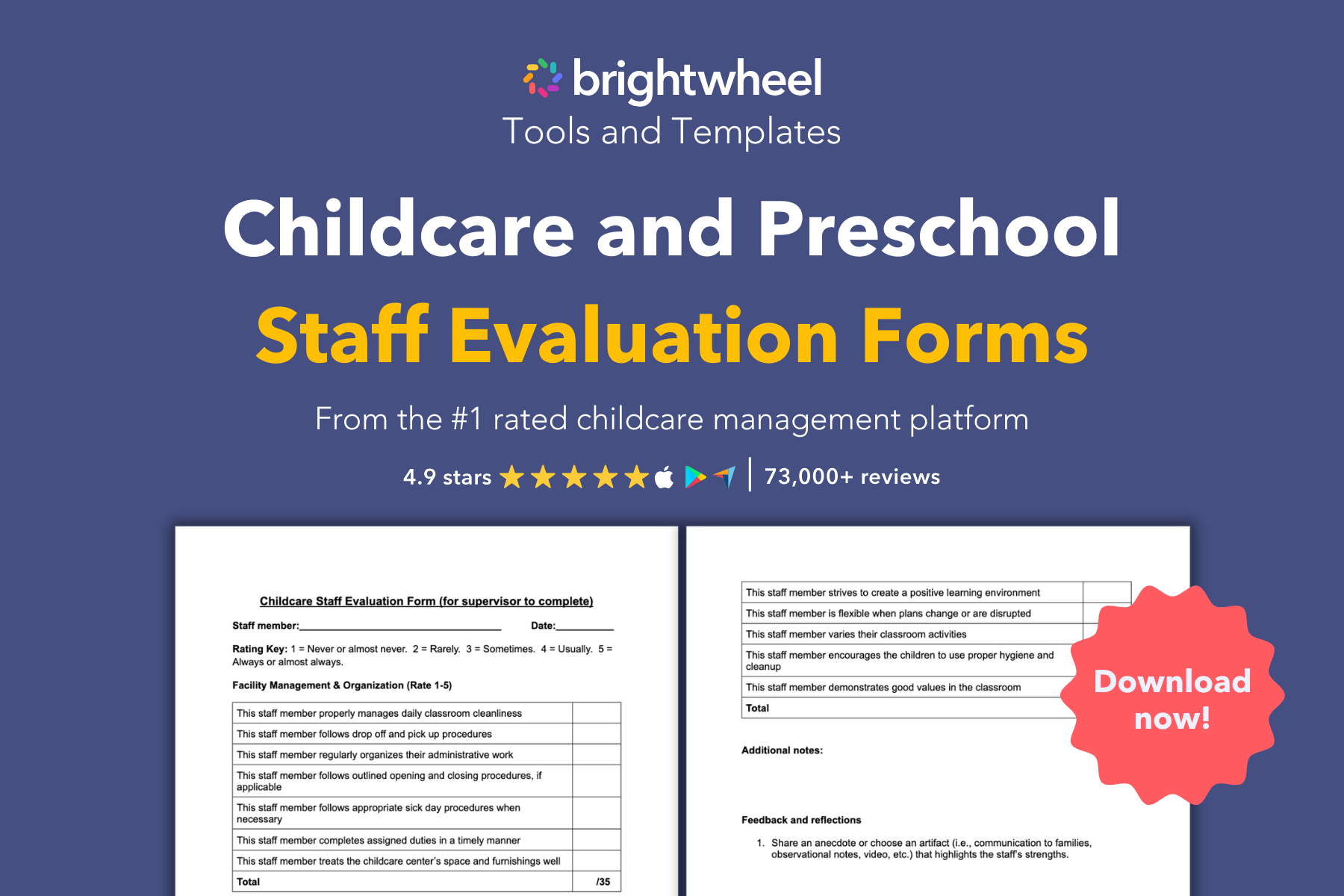
Staff evaluation forms are structured documents used by childcare directors to assess employee performance, set goals, and provide feedback. They typically cover key areas such as interactions with children, lesson planning, safety compliance, and classroom management.
Regular evaluations help directors identify training needs, recognize high-performing staff, and ensure consistent care quality. For educators, these reviews provide clarity on expectations and a roadmap for professional development, leading to higher job satisfaction and retention.
To support your team's growth, it is essential to have a review process that is fair, encouraging, and thorough. Our downloadable template helps you:
A comprehensive staff evaluation form should cover specific domains relevant to early childhood education. When customizing your form, consider including these key sections:
Conducting a performance review can be stressful for both the director and the teacher. Follow these steps to ensure a productive and positive experience:
After downloading the staff evaluation form template, check out the other early education resources for hiring and developing childcare staff:
Q: How often should childcare staff be evaluated?
A: Most childcare programs conduct formal performance reviews annually or bi-annually. However, providing informal feedback and coaching sessions quarterly or monthly is highly recommended to keep staff aligned and supported throughout the year.
Q: Can I use digital tools for staff evaluations?
A: Yes, many modern childcare management platforms allow you to create and store digital staff evaluations. Digital tools streamline the process, making it easier to track historical performance data and share feedback instantly with staff members.
Q: What is the difference between a self-evaluation and a supervisor evaluation?
A: A self-evaluation is completed by the employee to reflect on their own performance, strengths, and challenges. A supervisor evaluation is completed by the director to provide an objective assessment of the employee's work. Comparing the two helps identify gaps in perception and aligns expectations.