A free, printable checklist for onboarding new staff
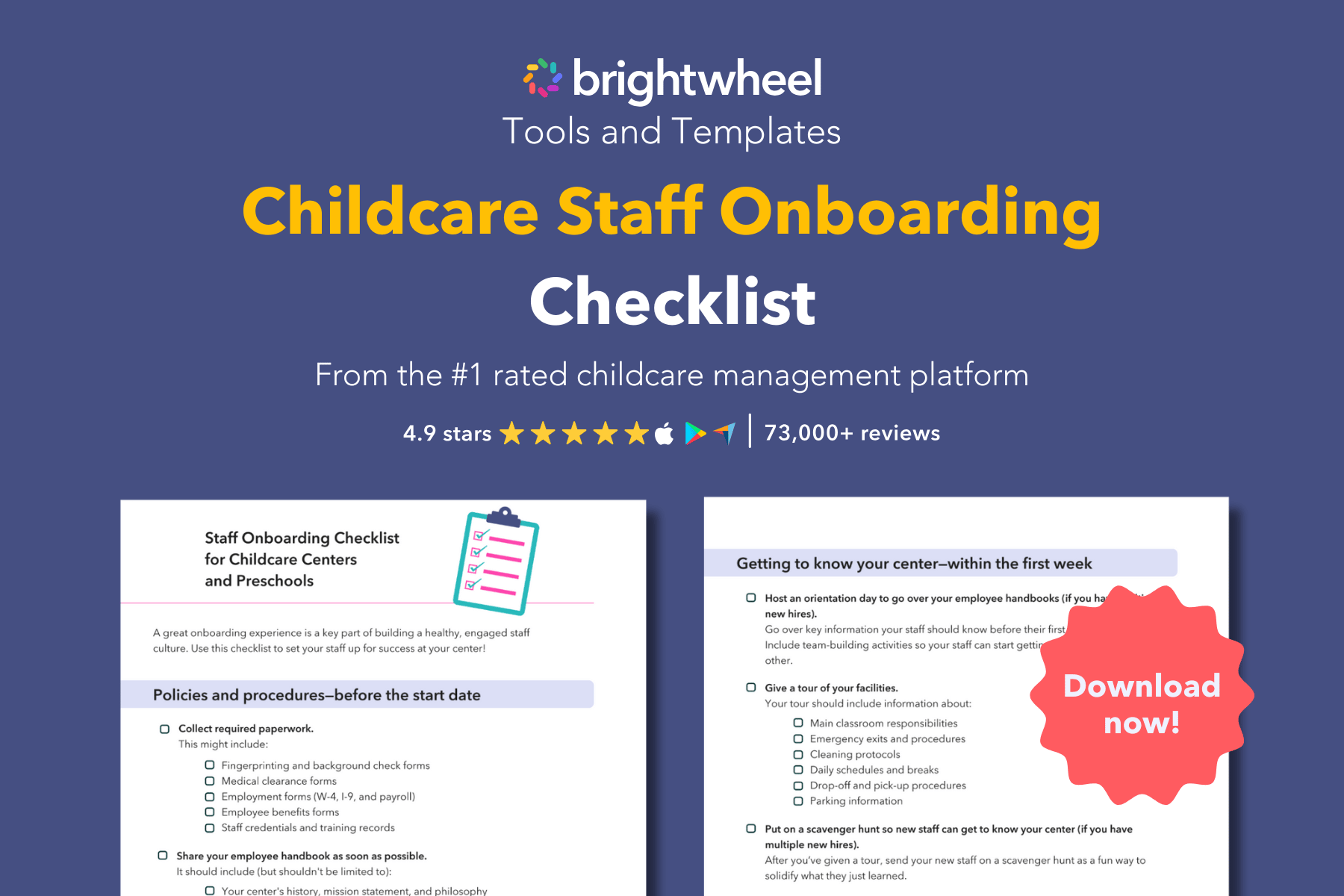
A childcare staff onboarding checklist is a structured document that guides directors and administrators through the process of integrating new employees into their program. It typically covers pre-start preparations, first-day orientation, required paperwork, safety training, and ongoing mentorship to ensure new staff members are compliant, confident, and culturally aligned with the program's values.
How do you onboard new staff in a childcare program?
Effective onboarding involves a phased approach: preparation before the start date, a structured first week of orientation, and continuous support over the first 90 days. This process ensures new hires understand safety protocols, curriculum requirements, and program policies while building relationships with families and colleagues.
The importance of structured onboarding
Implementing a formal onboarding process reduces turnover and improves the quality of care in your program. A well-organized onboarding experience helps new hires feel supported, clear about their responsibilities, and connected to your program's mission from day one.
Key benefits include:
- Reduced turnover: Staff who feel welcome and prepared are more likely to stay long-term.
- Compliance and safety: Ensures all licensing paperwork, background checks, and safety certifications are completed before working with children.
- Consistent quality: Standardizes training so every team member meets your program's expectations for care and education.
- Culture building: Immediately immerses new hires in your program's values and community.
What to include in your childcare staff onboarding checklist
To create a comprehensive onboarding experience, your checklist should cover these critical phases:
1. Pre-boarding (before the first day)
- Paperwork: Send offer letters, tax forms (W-4, I-9), and background check authorization forms.
- Licensing requirements: Verify certifications (CPR/First Aid) and immunization records.
- Welcome package: Prepare a staff handbook, uniform (if applicable), and a welcome email sharing the first day’s schedule.
- Tech setup: Create accounts for your childcare management software (like brightwheel) and building access codes.
2. Day one: Orientation and welcome
- Facility tour: Show them classrooms, break rooms, emergency exits, and where supplies are stored.
- Introductions: Introduce the new hire to the director, lead teachers, and administrative staff.
- Policy review: Go over the staff handbook, attendance policies, and dress code.
- Safety protocols: Review emergency procedures, allergy management, and safe sleep practices.
3. Week one: Shadowing and training
- Curriculum training: Review lesson planning protocols and developmental milestones.
- Shadowing: Have the new hire observe experienced teachers during drop-off, circle time, and pick-up.
- Software training: Demonstrate how to use tablets or apps for checking children in/out and logging daily activities.
- Feedback: Schedule a check-in at the end of the week to answer questions and gauge comfort levels.
4. Ongoing support (first 90 days)
- Mentorship: Pair the new hire with a mentor buddy for daily guidance.
- Goal setting: Set professional development goals for the first three months.
- Performance reviews: Conduct formal reviews at 30, 60, and 90 days to provide constructive feedback.
Frequently asked questions
Q: How long should the onboarding process take for childcare staff?
A: While the initial orientation may take a few days, a comprehensive onboarding process should last at least 90 days. This allows time for training, shadowing, and regular feedback to ensure the staff member is fully integrated and confident in their role.
Q: What is the difference between orientation and onboarding?
A: Orientation is a one-time event (usually the first day or week) focused on paperwork and policies. Onboarding is a long-term process that involves training, mentorship, and cultural integration over several months.
Q: Is a digital onboarding checklist better than paper?
A: Yes, digital checklists are often more efficient because they allow for real-time tracking, automatic reminders for expiring certifications, and easy storage of personnel files.
After downloading this staff onboarding checklist, explore additional resources for hiring and developing your team:
